
June 2026 Refined Petroleum Products Node
June 2026 Refined Petroleum Products Node. Refined product flows conditioned by Strait of Hormuz access management, Russia–Ukraine sanctions architecture, and vessel serviceability differentiation.
June 2026 Refined Petroleum Products Node. Refined product flows conditioned by Strait of Hormuz access management, Russia–Ukraine sanctions architecture, and vessel serviceability differentiation.

June 2026 Shipping and Logistics Node. Maritime access differentiated through security corridor controls, sanctions-linked registry exclusions, insurance conditions, and port-access restrictions.
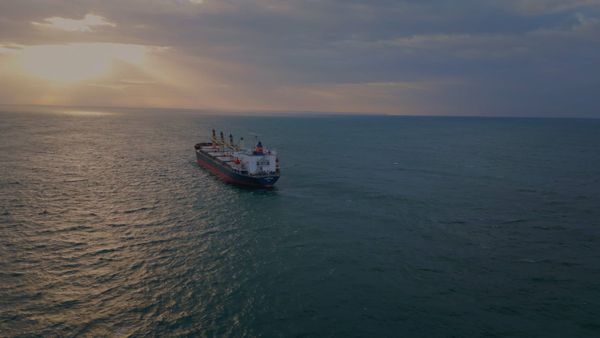
June 2026 Shipping Bulk Commodities Node. Bulk commodity vessel access conditioned by sanctions exposure, maritime enforcement architecture, and conflict-linked corridor security requirements.
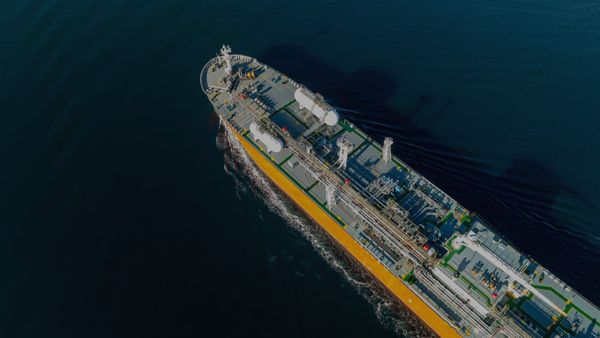
June 2026 Bulk Liquids and Industrial Gases Node. LNG and industrial gas access conditioned by Strait of Hormuz security enforcement, maritime serviceability constraints, and energy infrastructure dependencies.
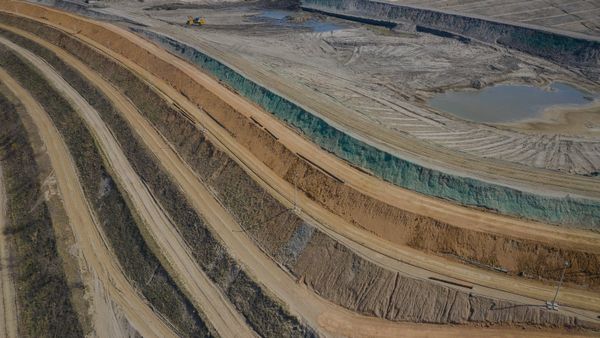
June 2026 Global Mining Intelligence Node. Critical mineral and rare-earth access conditioned through export permissioning, sanctions exposure, and seaborne routing constraints.
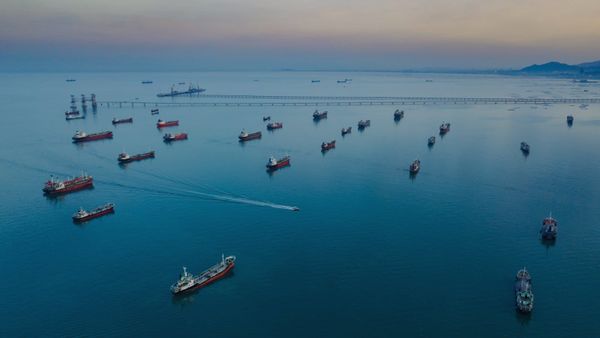
June 2026 Structural Trajectories. Where structural pressure intensified, stabilised, translated, faded, or became more dependent on formal institutional conditions across maritime, water, AI infrastructure, and semiconductor pathways.
June 2026 Structural Coupling Report. How conflict-linked corridor pressure, water allocation thresholds, AI demand, and semiconductor capital transmitted across operating systems in June 2026.
June 2026 Monthly Snapshot. Integrated strategic reading across Global Instability, Blue Gold, AI Infrastructure, and Semiconductors. June’s decisive scarcity was clearance — who controlled conversion from available capacity into operating access.

June 2026 Core Operator Brief. Institutional selection replaced gate-clearing pressure across maritime corridors, water allocation, AI infrastructure, and semiconductor pathways.

June 2026 Raven Signals Digest. Monthly operating picture across maritime access, water allocation, AI infrastructure, and semiconductors. Strait of Hormuz managed under security conditions. Water authorities prioritised critical users. AI and semiconductor access gates tightened.

May 2026 Shipping Bulk Ore Node. China's rare-earth export permissioning kept mineral cargo release conditional at the customs gate. No node-grade cascade qualified this cycle.

elite-operator-reports
May 2026 Shipping & Logistics Node. Strait of Hormuz hardened into fallback-port-dependent transit. Somali piracy re-entered the Western Indian Ocean as a sustained security constraint.

elite-operator-reports
May 2026 Global Mining Node. China's rare-earth export licensing remained the dominant strategic mineral access gate. Yttrium oxide exports to the US fell from 60 to 10 metric tons month-on-month.

elite-operator-reports
May 2026 Elite Operator Brief. Where structural pressure became operationally real — strategic mineral export permissioning, Strait of Hormuz fallback architecture, and Somali piracy re-entry.
core-operator-reports
May 2026 Structural Trajectories. Phase 4 held but became more operationally visible. Layer-by-layer analysis of where structural pressure moved across AI, water, semiconductors, and global instability.

core-operator-reports
May 2026 Structural Coupling Report. How pressure moved between systems — water into energy, grid access into AI capacity, semiconductor qualification into AI deployability, corridor insecurity into supply-chain timing.
core-operator-reports
May 2026 Monthly Snapshot. A functioning world becoming more conditional. Water thresholds, grid admission, semiconductor qualification, and corridor permissioning increasingly determined which capacity could actually operate.

core-operator-reports
May 2026 Core Operator Brief. Bundle orientation and reading guide for Core subscribers. Covers the central question, core finding, bundle structure, and June watch conditions.

raven-newsletter-feed
The world still worked in May 2026. But access — to corridors, minerals, water, compute, and cargo — became more conditional. A public operating environment brief.

entry-operator-reports
May 2026 Raven Signals Digest. Access gates that spread across maritime corridors, water systems, AI infrastructure, and semiconductors in April began converting into binding operating constraints in May. Monthly structural intelligence for Entry-level operators.

raven-newsletter-feed
April 2026 did not show collapse. It showed a world still functioning, but with more conditions attached. Across water, shipping, semiconductors, energy, and digital infrastructure, access is becoming more gated, coupled, and expensive.

elite-operator-reports
April 2026 Shipping Bulk Ore Node Report covering Guinea bauxite export-permission tightening and restored usability of blocked BHP iron ore stockpiles at Chinese ports.

elite-operator-reports
April 2026 moved Gulf maritime systems from open-use assumptions toward governed access. The strongest signals were conditional transit through the Strait of Hormuz and an enforced permission regime over Iranian port access.