Ukraine’s Nuclear Grid: Reactors Are Not the Weakest Link
A Raven Intelligence report on infrastructure strangulation warfare, nuclear-grid vulnerability, and the operational pressure points shaping Ukrainian energy sovereignty.
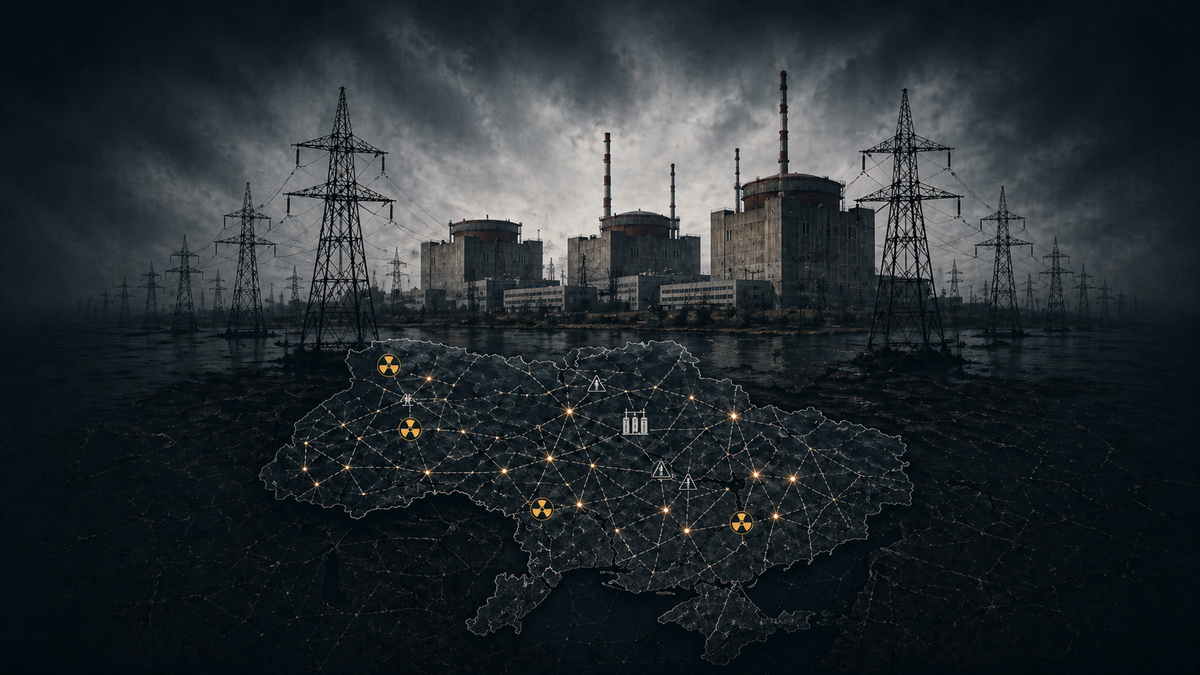
Ukraine’s nuclear-power system is not only an energy issue. It is a live case study in infrastructure strangulation warfare: the use of power, grid access, repair capacity, financing, and nuclear safety risk as tools of strategic coercion.
Ukraine’s reactors remain one of the country’s strongest endurance assets. But the decisive vulnerability is no longer only at the reactor level. The pressure point is the grid layer: high-voltage transmission corridors, substations, transformers, balancing capacity, repair crews, spare parts, and air-defence coverage.
The reactors may remain technically operable. The system around them may not.
Russia does not need to destroy every nuclear plant to weaken Ukraine’s energy sovereignty. It can occupy one plant, pressure the others through grid attacks, degrade repair tempo, and force the state into permanent emergency management.
This is the wider Raven Intelligence signal:
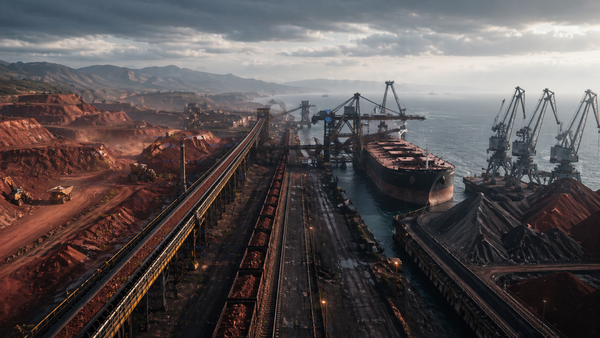
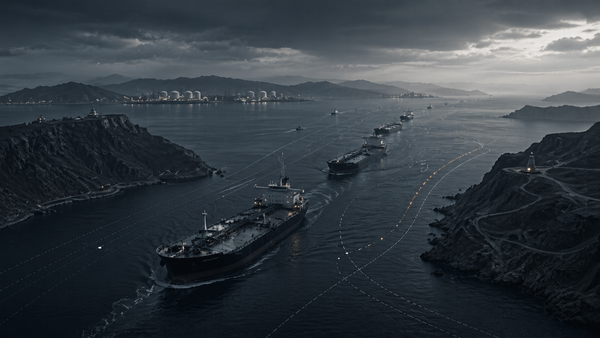
The new siege is not a wall around the city. It is pressure on the grid, food chain, ports, fuel, finance, water, data systems, and repair capacity until the state remains alive but cannot fully act.
Ukraine is the case study. The doctrine is larger.
Ukraine’s nuclear-power system is not only an energy issue. It is a live case study in infrastructure strangulation warfare: the use of power, grid access, repair capacity, financing, and nuclear safety risk as tools of strategic coercion.
Ukraine’s reactors remain one of the country’s strongest endurance assets. But the decisive vulnerability is no longer only at the reactor level. The pressure point is the grid layer: high-voltage transmission corridors, substations, transformers, balancing capacity, repair crews, spare parts, and air-defence coverage.
The reactors may remain technically operable. The system around them may not.
Russia does not need to destroy every nuclear plant to weaken Ukraine’s energy sovereignty. It can occupy one plant, pressure the others through grid attacks, degrade repair tempo, and force the state into permanent emergency management.
This is the wider Raven Intelligence signal:
The new siege is not a wall around the city. It is pressure on the grid, food chain, ports, fuel, finance, water, data systems, and repair capacity until the state remains alive but cannot fully act.
Ukraine is the case study. The doctrine is larger.
- 1. Raven Intelligence Lens — Infrastructure Strangulation Warfare
- 2. Executive Signal
- 3. Plant-by-Plant Risk Map
- 4. The Real Chokepoints
- 5. Occupation Scenario
- 6. Financial Life Raft — The EU Loan
- 7. Failure Mode — If the Life Raft Leaks
- 8. Energy-Security Assessment
- 9. Watch Metrics
- 10. Strategic Bottom Line
1. Raven Intelligence Lens — Infrastructure Strangulation Warfare
Raven Intelligence tracks the conversion of infrastructure into leverage.
In older siege warfare, an attacker surrounded a city and cut off food. In modern systems warfare, the attacker can surround a state through its dependencies:
- electricity
- food logistics
- water systems
- fuel supply
- ports
- rail
- telecommunications
- financial rails
- insurance access
- cloud infrastructure
- satellite access
- spare parts
- repair crews
- transformers
- regulatory permission
- import corridors
The target is not only the army.
The target is the operating layer of society.
A state may still exist on the map. It may still have a flag, elections, ministries, soldiers, and borders. But if it cannot reliably power its cities, move food, insure shipping, access finance, repair infrastructure, or maintain communications, its sovereignty becomes operationally weakened.
This is not always collapse warfare.
It is often constraint warfare.
The objective is to make every normal function more expensive, slower, less reliable, and harder to repair.
Ukraine’s nuclear-power system matters because it shows this logic clearly. Nuclear power is not just electricity. It is:
- baseload stability
- winter survival
- hospital resilience
- industrial continuity
- railway and logistics support
- military rear-area depth
- reconstruction capacity
- state morale
When nuclear plants are occupied, disconnected, or surrounded by grid attacks, the impact is not limited to megawatts.
It becomes a test of whether Ukraine can continue to function as an energy-sovereign state.
2. Executive Signal
Ukraine’s nuclear fleet is both an endurance asset and a strategic vulnerability.
When Ukraine controls the plants, nuclear power gives the country a durable baseload spine.
When Russia occupies a plant, that same asset becomes a coercive instrument: offline, unsafe, politically contested, difficult to recover, and useful as a bargaining chip.
As of April 2026, Zaporizhzhia Nuclear Power Plant remains the key occupied Ukrainian nuclear site. The International Atomic Energy Agency reported in April 2024 that all six Zaporizhzhia units were in cold shutdown, and nuclear status monitoring in 2026 continues to treat the plant as a high-risk occupied site requiring ongoing safety oversight.
The war against Ukraine’s energy system now has two linked layers:
- Grid attack: damage the nervous system.
- Nuclear occupation: capture or neutralise the spine.
Zaporizhzhia is the warning model.
3. Plant-by-Plant Risk Map
3.1 Zaporizhzhia Nuclear Power Plant
Status: Russian-occupied, offline, six units in cold shutdown.
Zaporizhzhia remains the highest symbolic and catastrophic-risk site in Ukraine’s nuclear system. It is Europe’s largest nuclear power plant, but under occupation it no longer functions as a usable Ukrainian generation asset.
Its danger lies in control, cooling reliability, off-site power, spent fuel safety, military activity nearby, and the long-term loss of sovereign energy capacity.
Main risks:
- repeated loss of off-site power
- dependence on emergency diesel generators
- military activity near nuclear safety systems
- reduced normal safety culture and oversight
- no Ukrainian operational control
- future uncertainty over safe restart or reintegration
Zaporizhzhia’s six units entered cold shutdown status by April 2024, and IAEA reporting in 2026 continued to note licensing and safety conditions around the occupied plant.
System impact: Zaporizhzhia is not merely offline capacity. It is occupied baseload sovereignty. Its loss removes a major energy asset from Ukrainian control while creating a standing nuclear-safety risk.
3.2 Rivne Nuclear Power Plant
Status: Ukrainian-controlled and operating.
Rivne is a key baseload provider in north-western Ukraine. Its reactor-level risk is lower than Zaporizhzhia because it remains under Ukrainian control, but its strategic value makes the surrounding grid infrastructure a major target.
Main risks:
- strikes on substations and high-voltage lines
- damage to power evacuation pathways
- transformer shortages
- forced power reductions due to grid instability
- pressure on national balancing capacity
In December 2025, the IAEA reported that Ukraine’s Khmelnytskyi and Rivne nuclear plants reduced power after widespread military activity affected energy infrastructure vital for nuclear safety and security.
System impact: Rivne helps keep western and central Ukraine powered. The danger is not only that Rivne could be hit directly; the deeper risk is that Rivne remains intact but cannot reliably deliver power into the system.
3.3 Khmelnytskyi Nuclear Power Plant
Status: Ukrainian-controlled and operating; future expansion potential.
Khmelnytskyi matters in two timelines.
In the present, it is a baseload asset. In the future, it is one of Ukraine’s possible reconstruction and expansion levers.
Main risks:
- transmission corridor disruption
- substation damage
- transformer bottlenecks
- power reductions due to attacks on surrounding grid infrastructure
- financing and security risk for future expansion
OECD Nuclear Energy Agency status monitoring identifies Khmelnytskyi as having two existing reactors and two reactors under construction, which makes it both a present operating asset and a possible future-capacity site.
System impact: Khmelnytskyi is both a current endurance asset and a future rebuilding lever. If it is constrained, Ukraine loses not only present electricity but part of its post-war energy pathway.
3.4 South Ukraine Nuclear Power Plant
Status: Ukrainian-controlled and operating.
South Ukraine is strategically important because of its role in southern grid stability and its integration with wider energy assets in the south.
Main risks:
- proximity to higher-conflict pressure zones
- vulnerability of transmission corridors
- dependence on hydro and other balancing assets
- missile and drone risks to surrounding infrastructure
- regional blackout amplification if power evacuation is disrupted
Recent reporting on Ukraine’s energy system notes that nuclear power has become more central as Russian attacks degraded thermal generation, with nuclear stations carrying a larger share of baseload demand.
System impact: South Ukraine is not just a power plant. It is a southern grid-stability anchor. If it is isolated, occupied, or forced into prolonged reduction, blackout risk rises sharply across southern and central regions.
4. The Real Chokepoints
Ukraine’s nuclear endurance does not depend only on reactor integrity.
It depends on whether the wider system can keep nuclear power useful.
4.1 High-Voltage Transmission
Nuclear power must be evacuated into the grid.
That requires:
- high-voltage lines
- substations
- switchyards
- transformers
- grid protection systems
- control and dispatch infrastructure
A reactor can remain intact while its output becomes constrained by damaged transmission infrastructure.
This is the quiet failure mode:
The plant survives, but the power cannot move.
The IAEA warned in December 2025 that strikes on Ukraine’s electrical grid appeared coordinated to maximise disruption, and that grid stability was deteriorating rather than improving.
4.2 Balancing and Reserve Capacity
Nuclear power is strong baseload, but it cannot carry the entire demand rhythm alone.
Ukraine still needs:
- hydro
- gas
- coal where available
- imports
- demand management
- emergency reserve generation
- battery and distributed backup where possible
If balancing capacity is degraded, the whole system becomes more brittle.
4.3 Repair Tempo
The war is also a race between destruction and repair.
Ukraine’s grid can survive heavy damage if repair crews, spare parts, access windows, and air defence keep pace.
If attacks outrun repair capacity, the system enters a more dangerous phase:
- longer outages
- slower recovery
- thinner reserves
- higher winter risk
- more forced load shedding
- greater dependence on external support
This is how infrastructure strangulation works. It does not need to produce instant collapse. It only needs to make recovery progressively harder.
5. Occupation Scenario
What Happens if Nuclear Plants Become Russian-Held Assets?
Core judgment:
If more Ukrainian nuclear plants become Russian-occupied, Ukraine does not only lose electricity. It loses sovereign control over its energy backbone.
This would shift the war from grid degradation into something more severe:
The conversion of Ukraine’s nuclear fleet from national infrastructure into coercive occupation infrastructure.
5.1 Ukraine Loses Dispatchable Sovereignty
A nuclear plant is not just a power station.
It is a dispatchable national asset.
When Ukraine controls a nuclear plant, it controls:
- operating decisions
- maintenance schedules
- fuel management
- emergency safety decisions
- grid dispatch
- staff authority
- regulatory compliance
- power allocation
When Russia occupies a plant, that control fractures.
The plant may still sit geographically inside Ukraine, but functionally it becomes detached from Ukrainian state authority.
Raven read: Occupation converts nuclear generation from a Ukrainian stabiliser into a Russian pressure lever.
5.2 Capacity Loss Becomes Political, Not Just Technical
Zaporizhzhia shows the model.
The plant does not need to explode to be strategically destroyed.
It only needs to become:
- unusable
- unsafe
- politically inaccessible
- disconnected
- impossible to restart safely
- unavailable to Ukrainian dispatch
That is already enough to damage Ukraine’s energy sovereignty.
Key line: A nuclear plant can be lost without being physically destroyed.
5.3 Russia Gains a Coercive Safety Hostage
An occupied nuclear plant creates leverage below the threshold of nuclear weapons use.
Potential coercive tools include:
- threatening unsafe restart
- restricting international access
- manipulating off-site power conditions
- placing military activity near the site
- blaming Ukraine for nearby incidents
- using nuclear safety as a negotiation pressure point
- complicating reconstruction and reintegration
The broader risk is not only meltdown. It is that nuclear safety becomes a bargaining surface.
Raven read: Occupied nuclear plants become radiological bargaining chips. Not nuclear bombs. Not normal power stations. Something in between.
5.4 Ukraine’s Grid Becomes Geographically Hollowed Out
If Russia occupies more plants, Ukraine’s grid map deforms.
Demand remains.
Cities still need power. Hospitals still need power. Rail signalling still needs power. Water pumping still needs power. Military logistics still need power. Industry still needs power.
But the large baseload nodes feeding the system are removed from Ukrainian control.
That forces heavier reliance on:
- imports from Europe
- emergency gas and diesel generation
- distributed generation
- repaired thermal capacity
- hydro where available
- rolling blackouts
- demand rationing
System effect: Ukraine shifts from a nuclear-backed grid to a patched survival grid.
5.5 Reconstruction Slows Even After Fighting Stops
A liberated nuclear plant cannot simply be switched back on.
It would require:
- security clearance
- demining
- unexploded ordnance checks
- full engineering inspection
- reactor-system verification
- control-room audit
- instrumentation audit
- personnel vetting
- fuel accounting
- spent-fuel inspection
- regulatory re-certification
- International Atomic Energy Agency review
- grid reconnection testing
This can take months or years depending on damage, sabotage, missing records, staff loss, contamination risk, and grid condition.
Raven read: Occupation creates a delayed reconstruction penalty. Even if territory is recovered, energy sovereignty does not automatically return with it.
6. Financial Life Raft — The EU Loan
Ukraine’s nuclear-grid vulnerability cannot be separated from its financial position.
In April 2026, the Council of the European Union finalised legislation underpinning a €90 billion EU loan to Ukraine, allowing the European Commission to begin disbursements in the second quarter of 2026. The Council states the loan is designed to support Ukraine’s urgent budgetary and defence-industrial capacity needs.
This loan functions as Ukraine’s first major state-continuity life raft for the 2026–2027 phase of the war.
Its purpose is not to deliver victory by itself.
Its purpose is to keep the Ukrainian state above water while Russia continues attacking the systems that allow the country to function.
The loan supports the survival layer:
- defence procurement
- public-sector wages
- essential services
- infrastructure repair
- energy-system resilience
- domestic defence-industrial production
- budget continuity
This matters because infrastructure strangulation warfare works by forcing the state into permanent emergency management.
Russia attacks the physical systems.
Ukraine must repair them.
Europe is now financing much of the continuity layer that allows repair, defence, and governance to continue.
The strategic equation becomes:
Russian destruction tempo versus European-financed repair tempo.
If European funding arrives fast enough, Ukraine remains damaged but operational.
If funding slows, fragments, or becomes trapped inside European political disputes, Russia’s infrastructure-strangulation strategy becomes more effective.
Raven judgment: The EU loan is the first life raft thrown to Ukraine’s state-continuity system as Russia attempts to turn infrastructure destruction into sovereign exhaustion.
7. Failure Mode — If the Life Raft Leaks
The loan only succeeds if it becomes a bridge from survival to resilience.
If it is mismanaged, delayed, poorly allocated, or weakened by corruption, it damages more than Ukraine’s budget. It damages confidence in Ukraine’s wider support architecture.
If it is not enough, Ukraine may remain afloat but unable to climb back in.
That produces a dangerous middle condition:
- alive but dependent
- funded but constrained
- defended but exhausted
- sovereign on paper, limited in function
This is not collapse.
It is managed constraint.
The danger is not only that Ukraine runs out of money. The deeper danger is that Ukraine receives enough support to avoid collapse, but not enough to recover sovereignty at the operational level.
In that scenario, Ukraine continues paying wages, patching infrastructure, buying weapons, and maintaining essential services, but remains trapped in emergency mode.
Russia does not need to break the state outright.
It only needs to keep the state from recovering faster than it is being damaged.
Raven judgment: A life raft that never becomes a bridge leaves the state in the water.
8. Energy-Security Assessment
8.1 Short Term: 0–12 Months
Ukraine can likely sustain a functioning power system if Rivne, Khmelnytskyi, and South Ukraine remain intact, fuelled, and connected to the grid.
However, rolling blackouts remain a serious risk, especially if attacks continue to damage transmission nodes, substations, and transformers.
Watch factors:
- high-voltage substation strikes
- transformer availability
- off-site power losses at nuclear sites
- air-defence coverage
- winter demand
- repair crew access
- European import capacity
Assessment: Survivable, but fragile.
8.2 Medium Term: 1–3 Years
The medium-term risk is structural fatigue.
Even if nuclear plants continue operating, Ukraine’s grid may become harder to stabilise if transmission, balancing assets, and repair capacity are degraded faster than they can be restored.
Key dependencies:
- Western air-defence support
- spare transformer supply
- nuclear fuel logistics
- emergency repair financing
- European grid interconnection
- no catastrophic event at Zaporizhzhia
- continued Ukrainian operational control over remaining plants
Assessment: Ukraine can endure, but only with sustained external support and repair tempo.
8.3 Long Term: More Than 3 Years
Without large-scale reconstruction, Ukraine risks becoming an energy-constrained economy.
That does not necessarily mean total failure.
It means a state that survives under permanent limitation.
Possible long-term effects:
- delayed industrial recovery
- higher electricity costs
- chronic import dependence
- grid rationing risk
- reduced investor confidence
- slower reconstruction
- regional inequality in energy access
- permanent strategic vulnerability around occupied or damaged nuclear assets
Assessment: Enough power to survive is not the same as enough power to rebuild.
9. Watch Metrics
Raven Intelligence should monitor the following indicators in the next reporting cycle.
9.1 Nuclear Safety and Control
- Zaporizhzhia off-site power losses
- use of emergency diesel generators
- International Atomic Energy Agency access and restrictions
- staffing levels and operator continuity
- Russian licensing or restart signals
- military activity near nuclear sites
- drone or missile trajectories near nuclear facilities
9.2 Grid-Integration Stress
- strikes on high-voltage lines
- substation damage
- transformer availability
- forced power reductions at Rivne, Khmelnytskyi, or South Ukraine
- grid frequency instability
- regional blackout duration
- emergency imports from Europe
9.3 Repair Capacity
- transformer replacement timelines
- availability of repair crews
- access windows after strikes
- spare-part supply chains
- foreign repair funding
- winterisation progress
9.4 Financial Continuity
- timing of EU loan tranches
- Ukraine’s remaining financing gap after EU support
- allocation between defence, infrastructure, and essential services
- signs of procurement delay or corruption
- European political disputes over future support
- domestic defence-industrial output enabled by EU funding
- energy-sector repair funding
- transformer and grid-equipment replacement timelines
- whether support shifts from survival funding to resilience funding
9.5 Strategic Escalation Indicators
- threats around nuclear restart
- expanded military activity near operating plants
- attempts to disconnect nuclear plants from Ukraine’s grid
- formal Russian administrative moves around occupied nuclear assets
- increased strikes on infrastructure serving nuclear plants
- political signalling linking energy supply to negotiations
10. Strategic Bottom Line
Ukraine’s nuclear plants give the country endurance.
Russia’s pressure campaign targets the infrastructure that turns that endurance into usable power.
The reactors are the backbone.
The grid is the nervous system.
Repair capacity is the immune system.
The EU loan is the life raft.
Occupation is the capture of the spine.
That is the deeper meaning of Ukraine’s nuclear-energy war.
It is not simply about whether a reactor is hit.
It is about whether a state can remain operational when its life-support systems are attacked, occupied, disconnected, and made dependent on external repair.
Final Raven line:
Russian occupation of Ukrainian nuclear plants does not merely remove power from the grid. It removes sovereign control from the state.
And the broader thesis:
Modern warfare is shifting from battlefield destruction to life-support strangulation. The objective is not always to conquer the state directly, but to make the state unable to feed, power, repair, insure, communicate, and govern itself.
Ukraine is showing the pattern in real time.
The question is no longer only whether Ukraine can keep the lights on.
The sharper question is:
Can Ukraine preserve energy sovereignty while the systems that make sovereignty operational are under sustained attack?